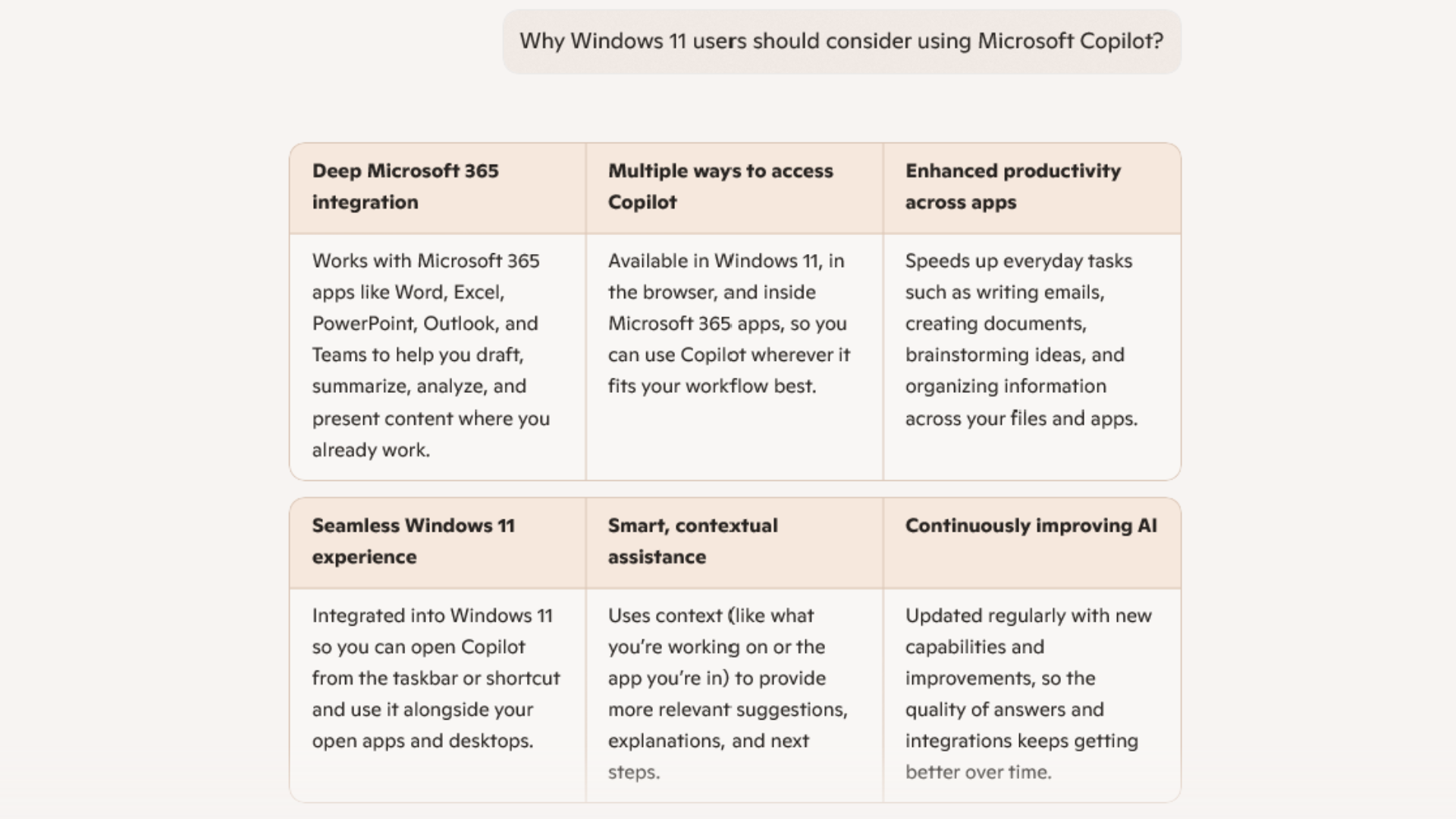
Microsoft Copilot is Microsoft’s AI assistant that works across Windows and various Microsoft 365 apps. Instead of living as a separate chatbot, Copilot is designed to support you inside the tools you already use every day.
There are many AI tools available now, but most of them work as standalone apps or browser-based chatbots. Copilot feels different because it appears in multiple places across the Microsoft ecosystem. Sometimes it works quietly in the background, and other times it shows up exactly where you’re already working. That flexibility is useful, but it’s also one of the main reasons people feel confused about what Copilot actually is.
I personally started using Microsoft Copilot for a very practical reason. I wanted faster and more precise answers than I could get from Google. I was tired of opening multiple tabs just to piece together one clear explanation. Over time, I realized the real value of Copilot wasn’t the AI itself, but how much better the results became once I learned how to write clearer prompts.
This guide explains what Microsoft Copilot actually is, where you can find it across Windows and Microsoft apps, and how to use it in a way that saves time instead of adding complexity.
What Is Microsoft Copilot
Microsoft Copilot is not a single app or feature that works the same way everywhere. It’s an AI assistant that behaves differently depending on where you access it and what you’re trying to do.
The easiest way to understand Copilot is to think about it based on how you access it, rather than what features it has. The same Copilot feels very different when you use it on your desktop, in a browser, on your phone, or inside a Microsoft 365 app. Once you look at it this way, many common questions and frustrations around Copilot start to make sense.
All general Copilot access points are free to use. You can sign in with a Microsoft account if you want your conversations to sync across devices, but basic usage works even without signing in.
Copilot Desktop App (Windows 11)
On Windows 11, Copilot is available as a standalone desktop app that you can open from the Start menu or taskbar. This version works well for longer conversations, follow-up questions and situations where you want to keep context instead of starting over each time.
Copilot Web App
Copilot is also available through the web at copilot.microsoft.com. The web version is often the quickest option for short questions or simple explanations, especially when you don’t want to install anything or keep a long conversation going.
Copilot in Microsoft Edge
Microsoft Edge includes built-in access to Copilot while browsing the web. This version focuses on the page you’re currently viewing and works best for summarizing articles, explaining unfamiliar topics, or pulling out key points without switching tabs.
Copilot Mobile App
Copilot is available on iOS and Android through the mobile app as well. The mobile version is designed for quick interactions when you’re away from your computer, such as checking something quickly or continuing a conversation you started earlier.
Copilot Inside Microsoft 365 Apps
Copilot inside Microsoft 365 apps works differently from all the other versions. It can see and work directly with your documents, emails, spreadsheets and presentations. Unlike the general Copilot versions, Copilot inside Microsoft 365 apps requires an eligible Microsoft 365 subscription and a signed-in account. It’s also where Copilot becomes the most useful for real productivity work, because it understands the context of what you’re doing.
Why This Distinction Matters
Most confusion around Microsoft Copilot does not come from the AI itself. People usually expect Copilot to behave the same way everywhere.
For example, someone may start a conversation in the Copilot desktop app and then open Copilot in Microsoft Edge expecting to find it instantly. While conversations do sync when you sign in, Edge focuses on the current web page.
Another common issue happens when users rely on Copilot for general questions and then expect the same experience inside Word or Outlook. When Copilot suddenly requires a subscription or does not appear, it feels inconsistent. In reality, the difference comes from what Copilot can access in each location.
I run into these differences myself because I use every Copilot entry point: desktop, web, Edge, mobile and Microsoft 365 apps. I also use a Microsoft 365 Family subscription, which introduces another important limitation. Copilot inside Microsoft 365 apps only works for the primary account holder. Other family members do not get access, even though they share the subscription.
Understanding these distinctions prevents frustration and helps you choose the right version of Copilot for each task.
What Microsoft Copilot Is Best At
Now that it’s clear where Microsoft Copilot can be accessed and why different versions behave differently, the next step is understanding what each version is actually good at in real use. Over time, I’ve naturally settled into using different Copilot entry points for different tasks. To make this more practical, let’s look at the most common ways Copilot is used.
Keeping Ongoing Conversations and Threads
I rely most on the Copilot desktop app on Windows 11 when I want to think through a topic over time. This version works well for research, learning new concepts and refining ideas across multiple messages.
When I explore a topic in depth, I often ask Copilot to help brainstorm new ideas, expand on unclear points and summarize what we’ve already discussed. Continuing the same thread makes this version ideal for deeper exploration rather than quick lookups. Common prompts I use here include:
- “Identify any sentences that feel vague or incomplete and expand them with clearer explanations and supporting detail.”
- “Suggest simple ideas I can include here to strengthen this article for my Windows and Copilot+ PC audience.”
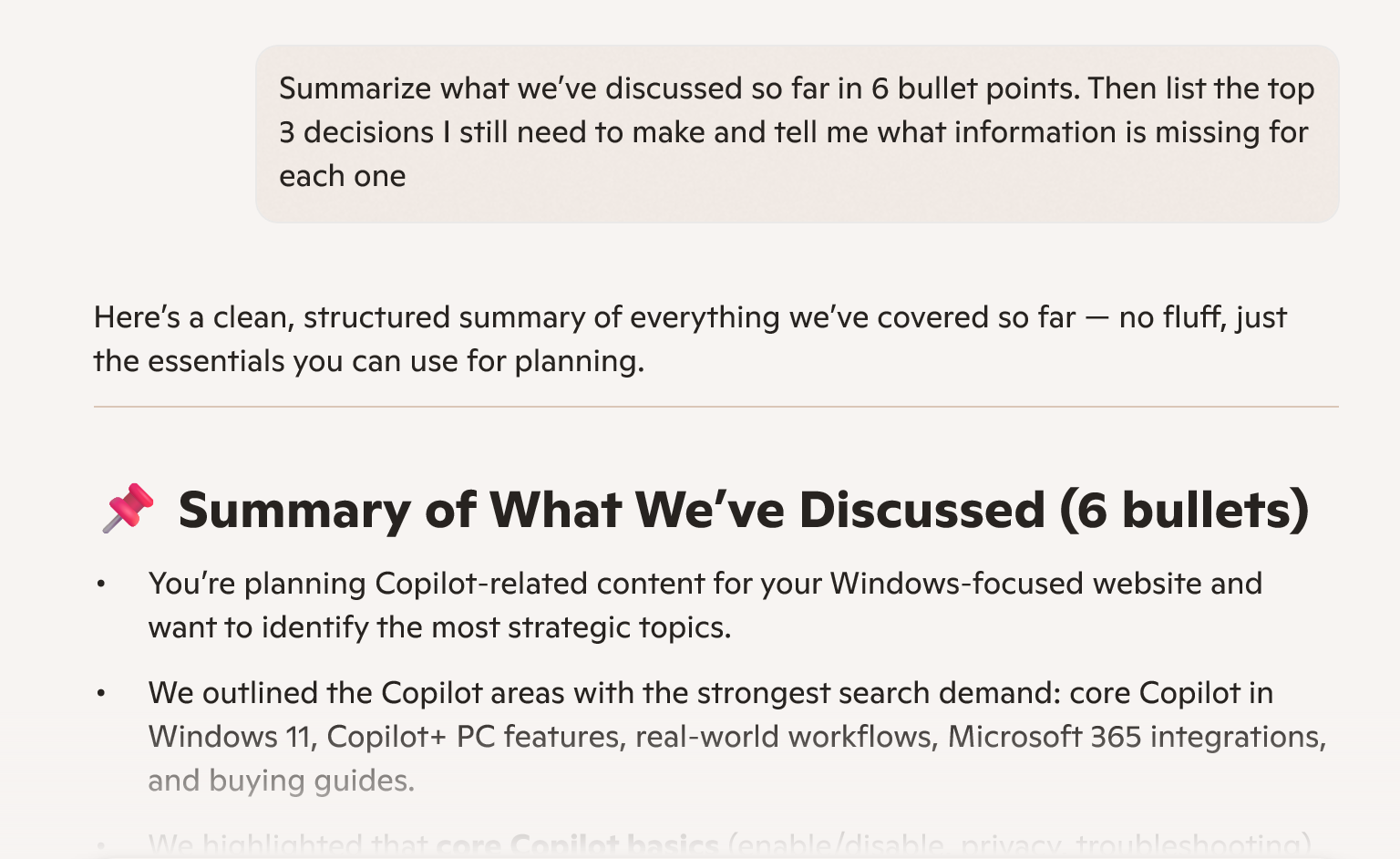
- “Summarize what we’ve discussed so far in 6 bullet points. Then list the top 3 decisions I still need to make and tell me what information is missing for each one.”
Getting Fast Answers Without Commitment
When I need a quick answer and do not care about saving the conversation, I use the web version of Copilot. This option works best for short explanations and one-off questions.
I often use it to confirm definitions or get brief explanations I can read in under a minute. Once I get the answer, I close the tab and move on. Some of the prompts include:
- “Explain in simple terms how optical illusions trick the brain.”
- “Describe in an easy‑to‑understand way how touchscreens detect your finger.”
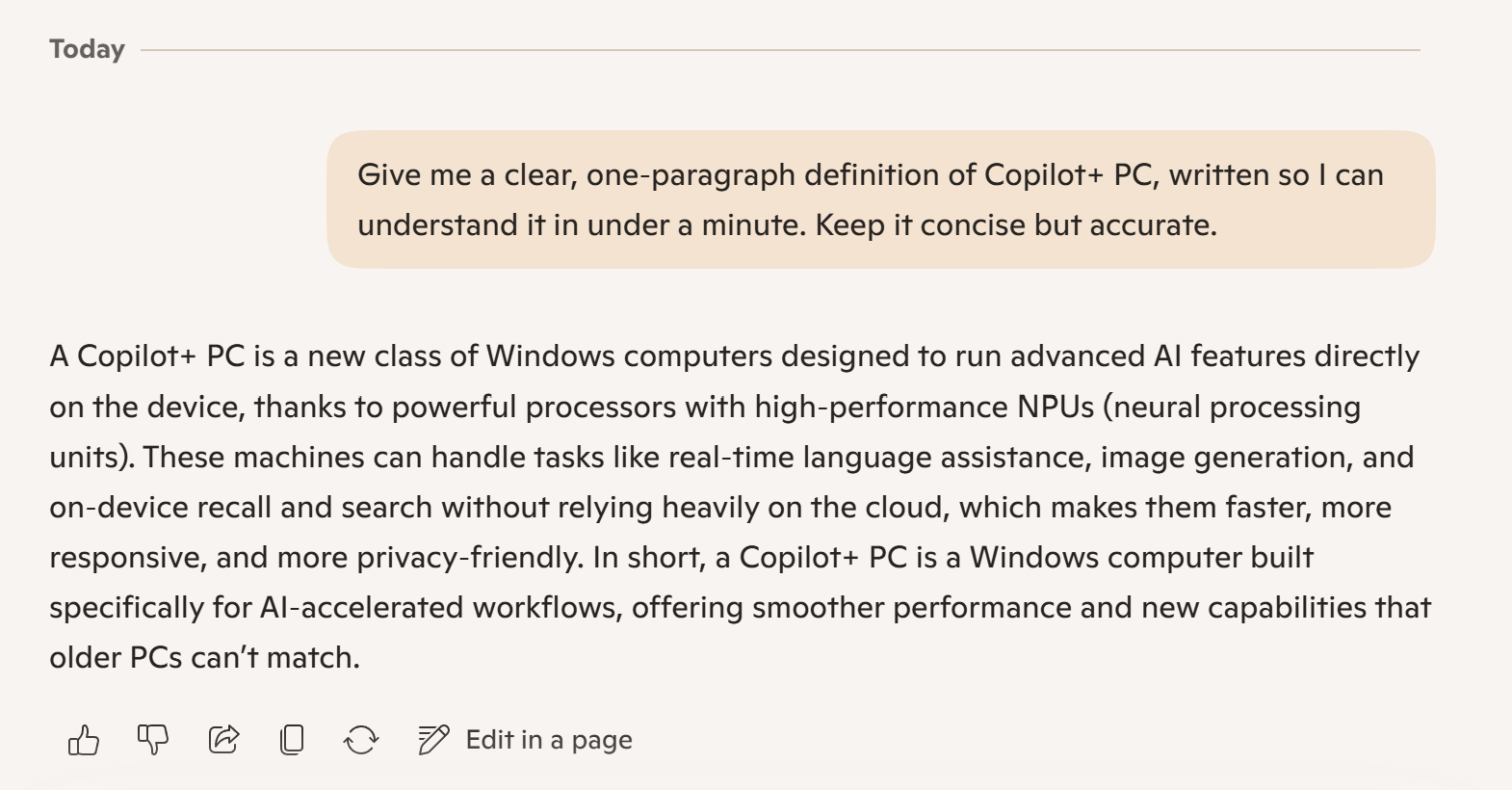
- “Give me a clear, one‑paragraph definition of Copilot+ PC, written so I can understand it in under a minute. Keep it concise but accurate.”
Understanding and Summarizing Web Content
Copilot in Microsoft Edge shines while browsing the web. I use it when I open long articles, guides or technical documentation, and want to understand the main idea quickly.
Instead of scrolling through pages, I ask Copilot to explain the content in plain language. This approach helps me decide whether the article deserves a deeper read. Useful prompts include:
- “Explain this content as if I’m new to the topic. What’s the core idea, and is it important for me?”
- “Show me the main points of this page”.
“Summarize this page in plain language and highlight the key points I should know.”

Quick Help While You’re Away From Your Computer
The Copilot mobile app helps when I am away from my desk. I use it for short questions or to continue conversations started on my computer.
It works well for quick summaries or brief explanations when I only have a phone available. Common prompts include:
- “I just got this text from my bank. Explain what it means?”
- “Help me decide what to cook tonight with chicken, rice and broccoli.”
“Summarize our last conversation in 5 bullets, then tell me what I should do next as step 1.”
Working Directly Inside Documents, Emails and Spreadsheets
Copilot inside Microsoft 365 apps delivers the biggest productivity gains. Instead of asking general questions, you’re working with real documents, real emails and real data that Copilot can already see and understand. I use it to rewrite Word documents, summarize long email threads, analyze Excel data more efficiently and search through OneNote notebooks.
This part of Copilot works very differently from the free versions, which is why I cover Microsoft 365 Copilot separately in a dedicated post focused on how it behaves inside Word, Excel, Outlook, OneNote and PowerPoint. Below are real prompts I use in each app to get practical, repeatable results.
Excel: “Analyze this table and explain what the final results mean, then compare the key values and highlight anything that looks unusual or inconsistent.”
Outlook: “Summarize this email thread and tell me if there are any action items I need to respond to or follow up on.”
OneNote: “Find all notes in this notebook that mention Microsoft 365 subscriptions and summarize what each one says.”
PowerPoint: “Create a short slide outline explaining the difference between Microsoft 365 and Office 2024, with one clear takeaway per slide.”
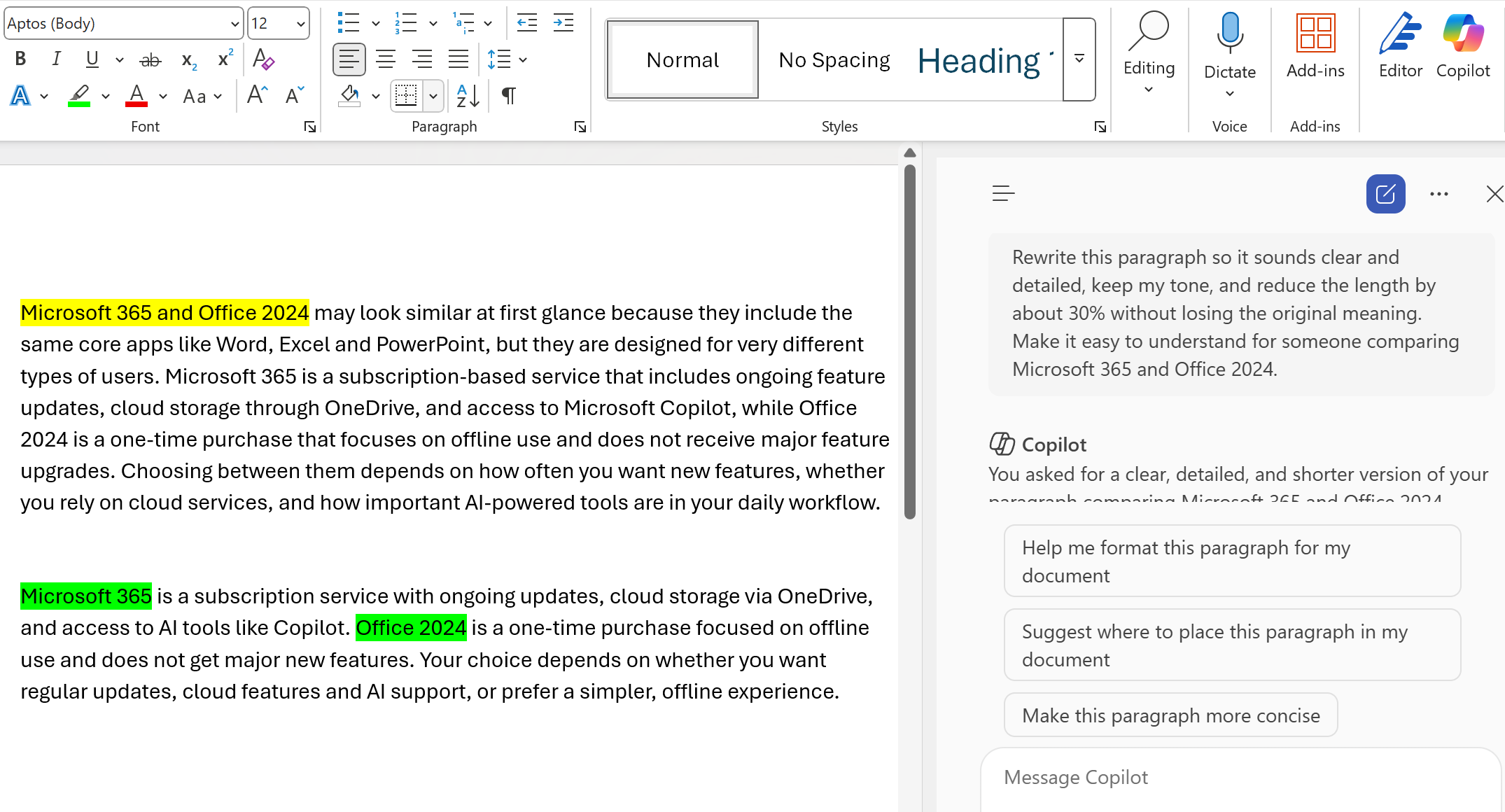
Word: “Rewrite this paragraph so it sounds clear and detailed, keep my tone, and reduce the length by about 30% without losing the original meaning. Make it easy to understand for someone comparing Microsoft 365 and Office 2024.”
How to Get Better Results With Copilot
To get good results from Copilot, it helps to understand how it works. Copilot pulls information from the internet and from the context you provide. That means responses are not always perfect. Clear prompts make a huge difference. I still review important details, especially pricing, technical steps, or anything that affects decisions.
A few habits consistently improve results:
- Be specific about what you want to achieve.
- Provide full context instead of vague descriptions.
- Ask for a clear format, such as paragraphs, steps or bullet points.
- Refine prompts instead of repeating them.
- Never assume Copilot knows your goal.
- Avoid treating Copilot as an authoritative source.
- Always verify important information.
Once I started thinking in prompts instead of questions, Copilot became far more useful. I still catch small mistakes, which is why review remains part of my workflow.
Microsoft Copilot Availability and Plans
Microsoft Copilot features depend on your subscription and account configuration. Microsoft publishes the most accurate and up-to-date information on its official plans page.
If you are unsure which Microsoft 365 plan fits your needs, I break down the differences in my Microsoft 365 subscriptions comparison guide, including how Copilot fits into each option.
Personal Experience and Advice
From my experience, Copilot becomes truly useful once you stop treating it like a search engine. It works best as a productivity assistant that responds to clear instructions. What still surprises me is how many people and businesses already have access to Copilot but never use it. In many cases, people simply do not know where Copilot lives or how to use it properly.
If you want a deeper look at how Copilot works inside Microsoft 365 apps, I cover that in a separate post focused on real-world use in Word, Excel, Outlook and other tools.